

"Apathy is Not Innocence" — The Absurd, Exile, and the Refusal to Choose.
There Is No Neutral Life

An Absurd Introduction
I don’t envy the digital anthropologists of the far future that will be tasked with looking back on our era to unravel the mangled web of chaos we wrought and ailments that plagued us. Whether it is the worst of these, or perhaps a symptom of the worst, apathy will be a defining characteristic of these times. In a culture where the exhaustion and negative choice have become the norm, and where institutional failure and political disillusionment seem endless, the turn towards online irony and disengagement comes as no surprise.
Philosophers throughout time have worked to solve these problems that just seem to keep compounding. The search to place ourselves in this universe in a way that makes sense of our lives and gives us a story that we can understand continues to elude us. Albert Camus came at this problem with his essays and fiction on the Absurd. For Camus, the absurd is the paradox between the fact that we cannot help but question the meaning of existence, while we simultaneously inhabit a silent universe incapable of granting us an answer.
Camus explored many of the consequences of his philosophy throughout his work, but most important here is his conclusion. His conclusion being that one must embrace the absurd, to live in “revolt” and deny hope for final consolation while living within the tension of the absurd.
This conclusion, to me, was always missing something. Camus often spoke of the “leap of faith” that other philosophies required, the step where a philosopher made a mistake and had smuggled meaning into it. While I don’t think that’s what Camus did with his concept of revolt, I do think that he never quite explained why in the way he would have liked that we must be compelled to such a decision.
Here I take from my other philosophical interests in ethics and my ideas on responsibility. Namely the idea that before we can ever even have the chance to try to decipher the meaning in our existence, or question our pathway, we are already confronted with obligations. We enter this life already connected to it. Regardless of the difference between my conclusion and Camus’, there is a polar opposite to them both which is to turn towards apathy.
Apathy, defined as a lack of interest, enthusiasm, or concern, can disguise itself as wisdom. The one who sees through all of our worldly problems and just knows that we can do nothing about them — and so chooses to cease caring — gives off an infectious vibe of clarity. However, when we look past the performance of insight, we see refusal. The refusal to take up the responsibilities that come with already being part of the world.
So I claim that the answer to our times is to reject apathy. We do not need cosmic justification in order to take life seriously. We only need to recognize that our actions affect others and carry consequences that future generations will inherit.
The Horror of Not Choosing
And I—my head oppressed by horror—said:
“Master, what is it that I hear? Who are
those people so defeated by their pain?”And he to me: “This miserable way
is taken by the sorry souls of those
who lived without disgrace and without praise.They now commingle with the coward angels,
the company of those who were not rebels
nor faithful to their God, but stood apart.The heavens, that their beauty not be lessened,
have cast them out, nor will deep Hell receive them—
even the wicked cannot glory in them.”And I: “What is it, master, that oppresses
these souls, compelling them to wail so loud?”
He answered: “I shall tell you in few words.Those who are here can place no hope in death,
and their blind life is so abject that they
are envious of every other fate.- Dante Alighieri, Inferno Canto III
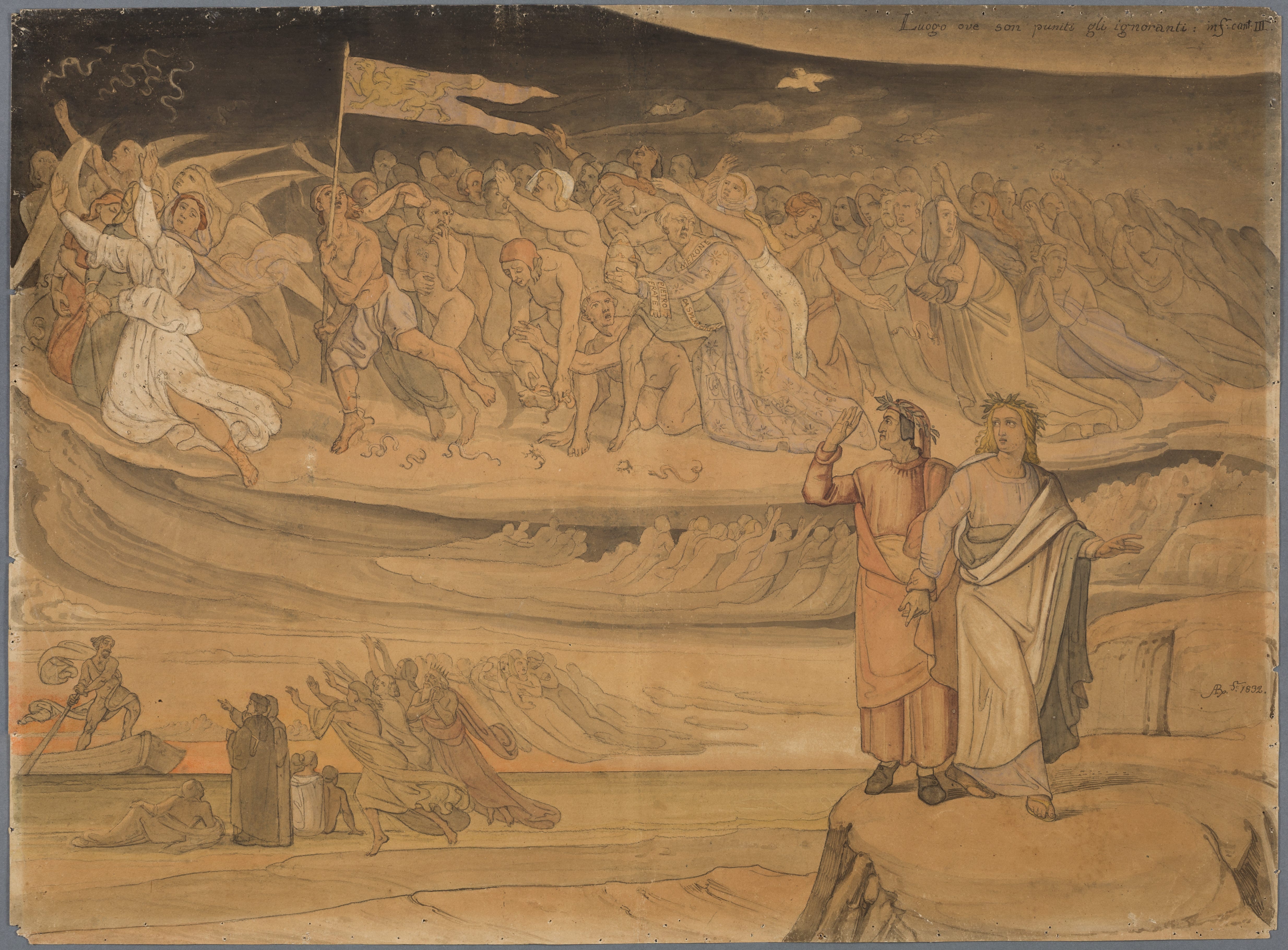
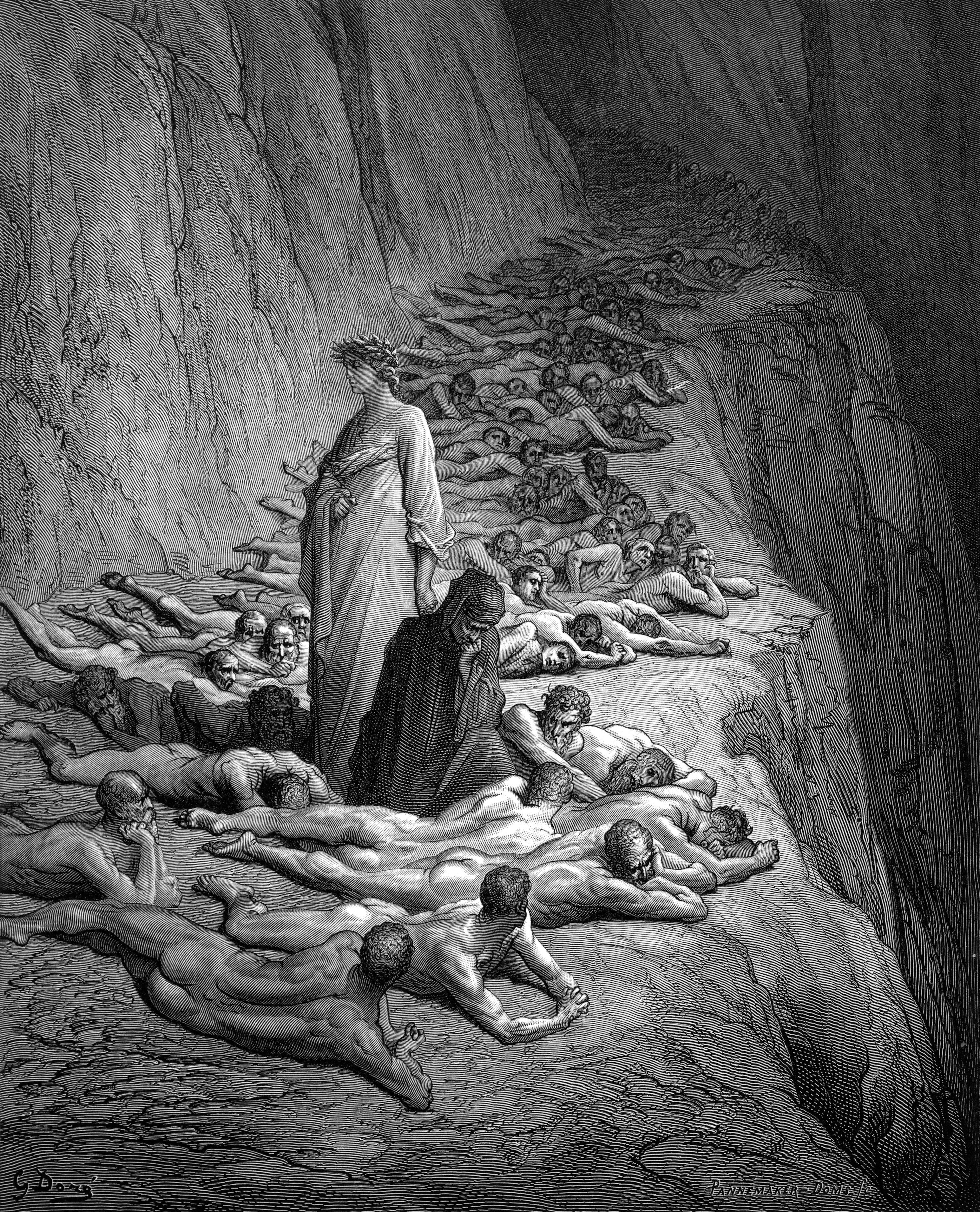
When Dante and Virgil are first beginning their journey into Hell, before they actually get into “Hell proper”, they encounter an endless mob running by. These souls, described as living “without disgrace and without praise” have become known as the “uncommitted” or the “neutrals.” They were not faithful or heroic, nor were they wicked. Heaven rejects them and Hell will not receive them.
Even over 700 years ago when Dante wrote Inferno, he held that a life without choosing commitments becomes spiritually weightless. These souls tried to escape guilt and judgement in their mortal lives by never fully choosing, and so they are denied a dignified fate in the afterlife. They are described as never having chosen a banner to fight for in life, so now they must eternally chase a banner that they can never catch.
We can take a lot from Dante here (no surprise). I think that it is often a mistake to take works from the Middle Ages as purely religious in their ideals. Dante was a brilliant writer, yes, but he was also a famed leader, speaker, and politician. His political downfall into exile came from a conflict between opposing factions, and he easily could have had those who remained neutral in mind when he wrote this passage1.
Modern apathy often appears under similar circumstances. It presents itself as sophistication, but it may actually be the desire to avoid being implicated in anything. We can think of many examples of countries, or voters, or institutions claiming to remain neutral during times of important choice.
This is simplification, for now of course, and not all neutrality is apathy. The point though is that apathy is not the same as innocence. It often shows as the refusal to participate in the moral reality that one already inhabits. So what happens when a person, or an entire civilization, normalizes this refusal to care?
The Modern Mood
“Nothing is possible” can only occur in a society that thinks, “Nothing is impossible.”
- Byung-Chul Han, The Burnout Society
Dante’s neutral souls are horrifying in their fate, but we know that most modern people do not experience themselves as cowardly souls running from their responsibilities. People of today are tired. They are burnt out. Rather than seeing two sides fighting and sitting on the fence, most people today see the countless global issues and are saying, “What difference will it make?”
Today’s culture of apathy deserves sympathy before we attempt to dismantle it. Costs of living are rapidly rising and trust in our institutions is degrading. Political campaigns never end and the need to constantly have an opinion on every bit of news is overwhelming. People are coming around to the sense that even when they do have a choice, those choices are compromised. I mentioned the idea of “negative choice” earlier, and by this I mean people are not choosing what they actually want but choosing against the worse option. Elections are the obvious example where both options are poor and people feel they must just pick the lesser of two evils.
All of that goes without saying the most important part of the modern apathy machine which is the internet. The internet has developed into a prison of irony. It started as a way to protect from humiliation and disappointment but has become a warped lens. Every serious thing must now be filtered through memes and sarcasm, so we detach rather than be embarrassed by being sincere. This is where apathy hides as wisdom. If you act like you don’t care, then you won’t make the mistake and get embarrassed. Then eventually the act isn’t an act anymore.
Thus we can see that this apathy is understandable, but don’t be mistaken. It is not neutrality. When enough people stop caring it changes what becomes possible. When enough people stop choosing, the choices don’t disappear. They are made for us. Those who are apathetic as a defense mechanism to a broken system that they see through are actually participating in its continuation when they choose not to act.
Beyond the Absurd
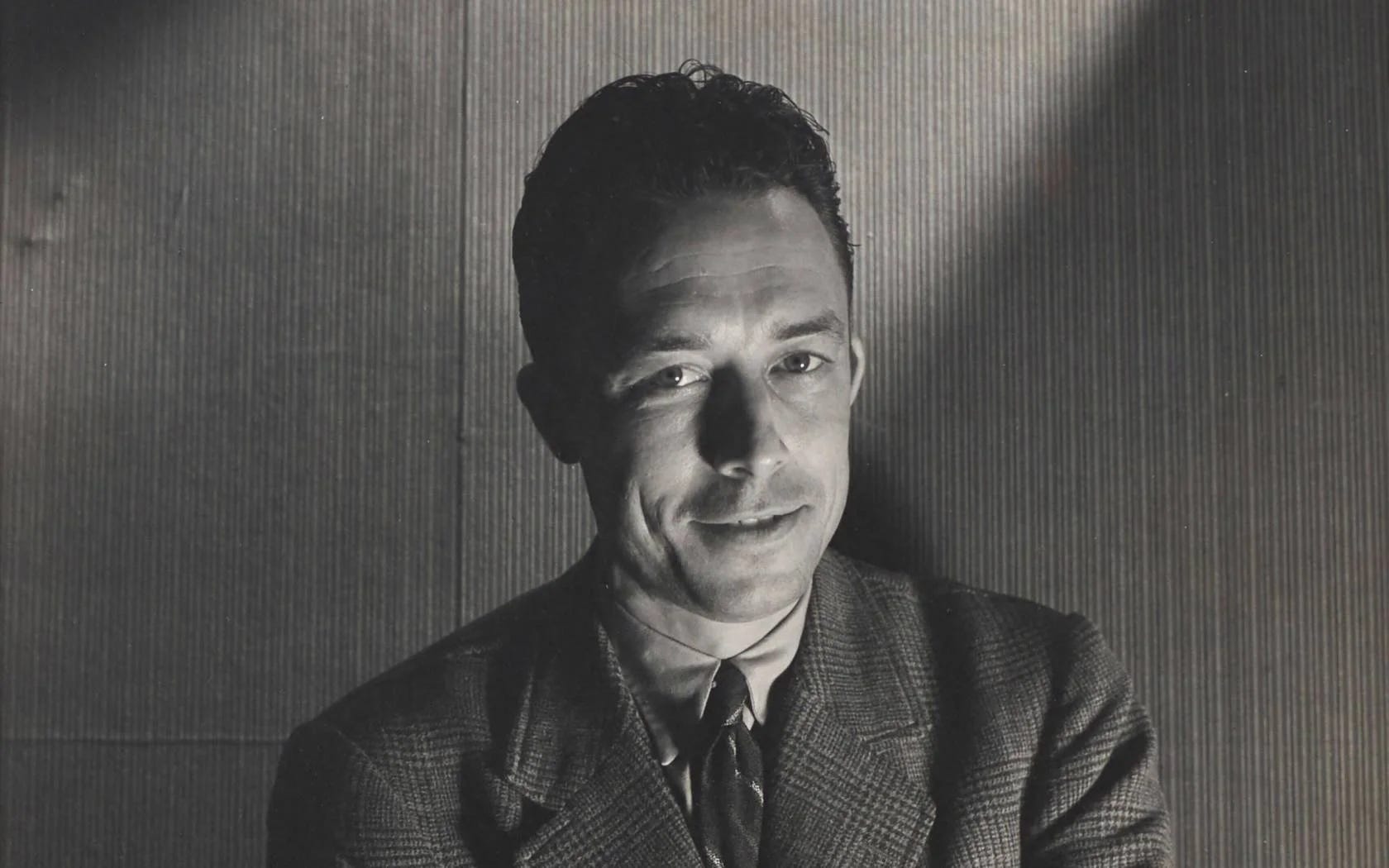
My project here began in reference to Camus’ beginning with the first philosophical question of suicide. He asked if life is worth continuing after being faced with the absurd. As I mentioned before, his conclusion rejects suicide and false consolation, and he answers with revolt. We are to continue living without pretending we have the final answers.
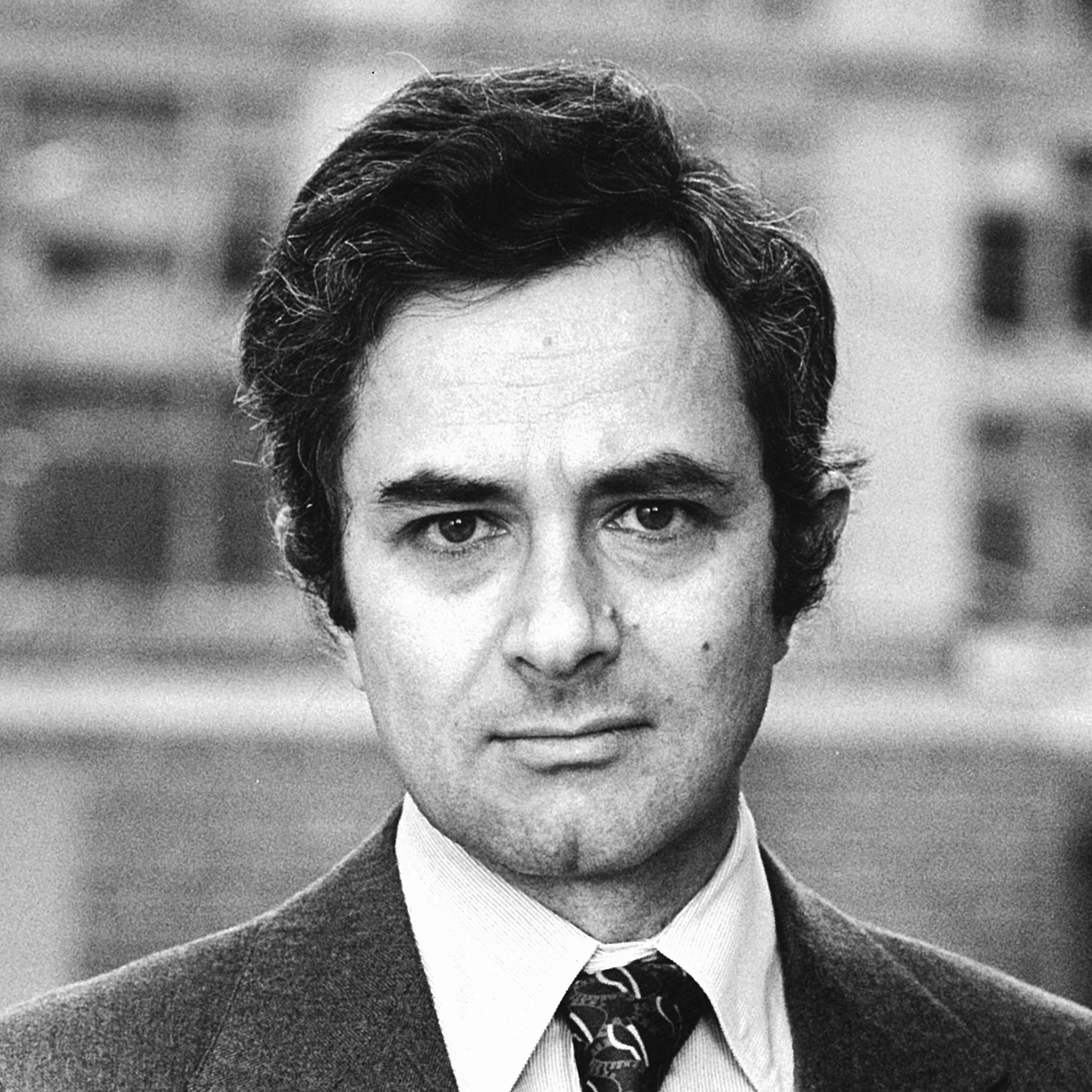
Philosopher Thomas Nagel2 shifts this problem in his work The Absurd. For Nagel, the absurd isn’t just the clash between humanity and the silent universe, but also comes from within us. We do take our lives seriously, but we have the ability to step back and view that seriousness from a detached perspective. Meaning, we act in our lives in a serious way toward our goals, but we can step back and see how strange and meaningless it all appears. This is the absurd to Nagel.
Rather than revolt, Nagel concludes the absurd with irony. He thinks we must see the humor in the absurdity and laugh with ourselves. He is right that human seriousness without irony can become fanatical or vain. Irony without seriousness though, can become apathy, and we have an abundance of irony that I don’t think Nagel envisioned when he originally wrote his essay on the absurd (I would love to know).
Defining seriousness here just means recognizing that our lives are consequential. It doesn’t mean that we become humorless or moralizing or self-important. We recognize that we affect others and that we must continue to author the story that we were born into.
Regardless, just because we can laugh at how seriously we take the small things sometimes doesn’t mean that we are absolved from taking life seriously. We are still obligated.
The Mistake of Apathy
The real mistake of apathy is taking the lack of a final meaning and reducing that into nothingness. That because we have no universal meaning, then no local meaning matters either. Here is my biggest departure from my sympathies for the apathetic.
We can think of meaning much like we see the laws of physics, as descriptive. Now, meaning is not descriptive in the same way that physics is. The laws of physics do not command the universe, they just describe the patterns that we already see the universe acting within. Meaning too is recognized, but through our obligations, care, suffering, and consequences. Meaning is not handed down from existence upon request. The response from the universe will never arrive, but it doesn’t need to for us to recognize meaning in our lives.
We see it when we are born already into cultures and societies and relationships. We participate in history and our institutions and our actions have consequences no matter what we do. We know when we see a hurt child that we don’t need a grand cosmic meaning before they need care. The same goes for society when faced with preventable suffering.
If anything, the absence of final justification doesn’t excuse apathy and erase responsibility, but makes responsibility even more important because we know that no one else is coming to settle things for us.
Refusing Negative Choice
Naturally, you may be thinking, “Okay I get it, we need to be responsible, but that can’t just mean blindly choosing something no matter what.”
Of course not. Responsibility doesn’t mean blind participation. Sometimes, responsibility requires refusal. If the available choices are false (the election example from earlier), then choosing haphazardly can be a surrender. Modern systems have figured out ways to preserve themselves by giving us only bad options to choose from and calling that freedom. Not only are the options often bad, but we have become so accustomed to these types of choices that we no longer choose what we want, but only act against what we do not.
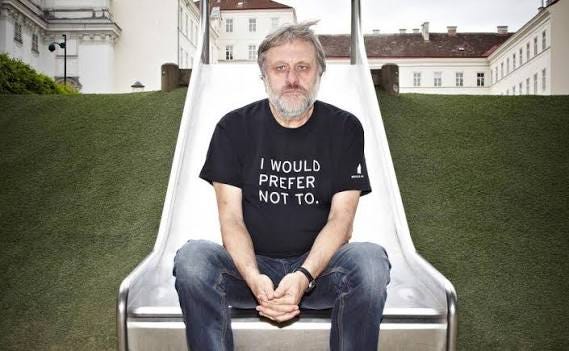
Slavoj Žižek often references the quote, “I would prefer not to,” originally from Herman Melville’s Bartleby, the Scrivener. Žižek notices something important in refusal and uses Bartleby to think through the symbolic and political order of things. When is something really itself as opposed to just not something else?
Applying this to negative choice, we see that the options offered by the system are often these false choices, and that sometimes participating means accepting the terms of a corrupt game. In such cases refusal can be powerful, and even warranted. Responsible action then cannot just be to choose from the options we are already being handed.
Sometimes, we must refuse, but refusal has limits and we mustn’t become paralyzed.
From Refusal to Responsibility
As with Dante’s understanding of exile and neutrality, Camus understood the limit of refusal better than almost anyone. In his 1957 collection3, Exile and the Kingdom, Camus speaks to exile, neutrality, and refusal all in one.
Spoilers ahead (the story is very short, I highly recommend it.)
The Guest follows Daru, a village school teacher. He is ordered by the French colonial state of Algeria to transport an Arab prisoner. If he obeys, he becomes an instrument of colonial violence and makes an enemy of the prisoner’s people. If he releases him, he makes an enemy of the state and thus enters the conflict still. Daru wrestles with this choice, feeding and hosting the prisoner before walking with him for a distance and then giving the prisoner the choice instead. He can take one road towards his imprisonment, or another towards a group of nomads to try to make a life with them.
Daru gives the prisoner some supplies and turns away, letting the man make his choice. After some time, Daru’s curiosity gets the better of him and he turns back to see which path the prisoner chose. He sees that the man chose the path towards the prison. Daru then returns home to his schoolhouse, but when he arrives he finds the words, “You handed over our brother. You will pay for this.” written on his blackboard.
This short story couldn’t be a better example of what I’m trying to explain. Daru never got a clean choice. His refusal didn’t let him escape history. Thus, we cannot live only by refusal. Part of responsibility is acting even under uncertainty, and knowing that we can’t avoid consequences.
Even when the choices are false, something will happen. If we refuse, the machinery marches on. Refusal is an option, and a powerful one, but we can’t turn that into complete withdrawal. The serious life must learn what can be refused so that something better can be served.
Objection!
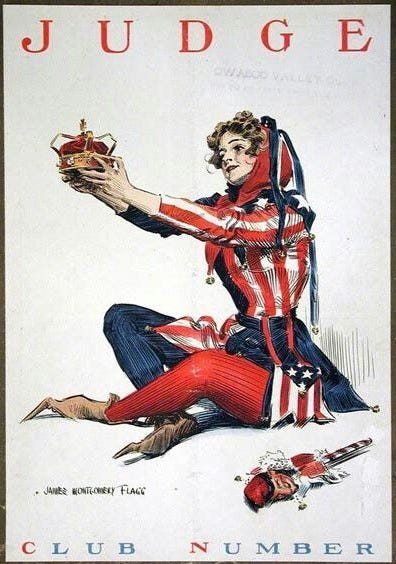
Before concluding, it is worth clarifying what I am not arguing.
I am not arguing that every exhausted person is guilty of some great moral failure. Apathy rarely appears from nowhere. People become apathetic for reasons. They are tired. They are lonely. They have been disappointed too many times. They have watched institutions fail, leaders lie, communities fracture, and public life decay into performance. For many people, disengagement is not the first response to the world. It is what remains after too many attempts to care have been punished or ignored.
That matters. Any argument against apathy that begins by sneering at the apathetic has already failed. The point is not to moralize exhaustion. The point is to ask what happens when exhaustion hardens into a philosophy.
There is also a difference between apathy and distance. We need distance. Nagel is right that human seriousness becomes ridiculous when it cannot see itself from the outside. A person who takes every opinion and inconvenience as cosmically significant is not living seriously. My point is not to abolish irony, but to keep irony from becoming an alibi for withdrawal.
Nor am I arguing for fanaticism. Taking life seriously does not mean pretending to possess final certainty. In fact, the opposite is true. The seriousness I am defending is seriousness under uncertainty. We do not act because we have solved existence. We act because we are already involved in it. Our choices affect other people. Our failures leave consequences. Our refusals shape the world just as surely as our commitments do.
This is also why refusal matters. Sometimes participation means cooperating with a structure that has already degraded the terms of action. In those moments, refusal may be necessary but can’t be the whole of life. “I would prefer not to” is powerful when it interrupts a false demand. It becomes empty when it becomes a permanent posture toward the world. We must ask what cause our refusal serves.
Finally, none of this means that every individual is responsible for saving the world alone. That would only reproduce the same failure I have criticized elsewhere. Forcing individuals to bear burdens that belong to institutions, communities, and civilizations. Responsibility exists at different scales. A government bears responsibilities an individual cannot. An institution bears responsibilities a private citizen cannot. This does not, however, mean the individual bears none.
We do not have to complete the work in order to participate in it. We do not have to repair the whole world in order to stop abandoning the part of it that passes through our hands. Apathy tells us that because we cannot do everything, we are excused from doing anything. Responsible seriousness begins by rejecting that excuse.
Conclusion
So the answer to apathy is not naive optimism or moral grandstanding. Nor is it giving in to pessimism. It is bearing the burden of participating in the world even when the world offers no final guarantee. It is taking responsibility seriously. So many of the disastrous situations we find ourselves in today are because those with the ability to make a difference chose not to. Future generations will have to deal with the consequences of our choices, or lack thereof.
Taken together, Camus, Dante, Nagel, and Žižek show show us the horrors of refusing commitment, that the absurd doesn’t justify surrender, and that even refusing the most difficult choices can have consequences, but may still be necessary. We might never receive the clean choices that we desire, or the final meaning that we can’t help but to seek, but we remain answerable for the consequences that we pass on. We are already here participating, and our refusal to care becomes what the world becomes.
Thank you for reading.
These are my Lamentations of Late.
- JD
Virgil tells Dante not to dwell on the uncommitted and that they must move on. Dante actually remarks that he recognizes a few of them before he averts his gaze.
Nagel, famous for his work on phenomenal consciousness in his paper, “What is it like to be a bat?” — We can thank him for the phrasing of “there is something that it is like to be” that has confused thousands.
The same year in which Camus received the Nobel Prize for literature.