

You Are Responsible for a World You Did Not Create
The Burden of Inheritance and Participation

When we last left our heroes... I ended with the following:
If we are too early to know whether existence ultimately justifies itself, then the question becomes practical rather than theoretical.
What should we do in the meantime?
My answer is that we should continue the work.
We like to imagine ourselves as independent individuals freely choosing our commitments. Long before we ever make a choice though we have already inherited our reality. We inherit language before we speak. We are born into a culture before we understand it. Connected to others through relationships we didn’t choose.
We arrive in the middle of the story. The story of an infinite web of interconnected parts, and our actions have consequences that can affect those parts.
I know what you’re thinking. “We only just decided that it’s okay to continue existing, and now we’re getting work involved. What a scam. What work are we even doing? I’m good, you go on ahead.”
Unfortunately, as you’ll find out, you don’t really have a choice.

Interdependence
The Myth of the Self-Made Person
"Self-consciousness exists in and for itself when, and by the fact that, it exists for another self-consciousness; that is, it exists only in being acknowledged."
- G.W.F. Hegel, Phenomenology of Spirit
This is one of those times that I’m most excited to be undertaking this project. Hegel intentionally used this kind of language and structure, both because he felt the need when making his point, and because he wanted people to more deeply engage with philosophy. To actually do philosophy is to challenge oneself with the ideas, and to take the time to fully untangle them (or attempt to in the case of Hegel’s work).
However, I also see the value in making things accessible for more people. If I didn’t, I wouldn’t have started this project. We can take the heart of the matter and look at many complex topics in new ways simultaneously, and if it inspires someone to more deeply engage on their own, then I’ve succeeded.
So what is Hegel actually saying here?
That the self, you, the being that thinks of itself as “I”, cannot exist without someone else to acknowledge it. Not just that other people influence us, or literally create us (although they do also do those things), but that the concept of “I” or a self is relational. What would “I” mean, if there were no “other”?
For Hegel, the self emerges from a web of social and historical relationships. If we can distinguish ourselves as an individual self, then we already presuppose others. Others that we can relate ourselves to and others that have created the cultures and identities that we are born into. We are never an isolated self, but always a subject in interaction with another object or subject.
I know you’re thinking, “What’s the point of all this?”
In short, I’ve claimed to want to simplify complex topics, learn together, and to work towards actually affecting change. I think this topic is the most important so far in understanding how we are going to do that.
This is the beginning of trying to bridge between thinking about what the world is, and how to actually operate effectively within that world. It is a bridge we will have to cross repeatedly in both directions throughout this journey, unpacking the complex metaphysical ideas and hauling them into the real. Bringing the materials to the forge in order to create the actual tools we can work with. An exciting idea, but a complicated one.
Alright back to it.
With the idea of the Other something interesting happens. Where Hegel brings up how self-consciousness emerges, another brilliant thinker gives us more insight from another angle. Philosopher Emmanuel Levinas tells us what to do when we encounter another person.
In Otherwise than Being: or Beyond Essence, Levinas makes a profound claim. That our encounter with the Other cannot simply be thought of as the foundational event that creates our “self”.
The people around us are not just pieces of our own story. They are subjects in their own right, each possessing an interior life that exceeds our understanding. The Other can never be fully reduced to our understanding. No matter how much we know about someone, there will always remain the unknowable.
Not only are we unable to fully understand the Other to use them as an object in our subjective experience, it is actually wrong to do so. That we gain an ethical demand, becoming responsible for the Other even before meeting them, simply because we are now aware of their existence and our own self in relation to them.
“Everyone is the other and no one is himself”
- Martin Heidegger, Being and Time
Additionally, I’d like to point out that these insights are not unique to Hegel, Levinas, or even Western philosophy at all.
More than a thousand years before Hegel (closer to two thousand to be honest), Buddhist philosopher Nagarjuna, founder of the Madhyamaka school of Tibetan Buddhism, arrived1 at some very similar ideas about existence and independence.
Central to Madhyamaka is the principle of dependent arising. That things do not arise independently or possess a completely self-sufficient essence. Every phenomenon exists in dependence upon and in relation with other phenomena. Not only the self, but all things.
“Neither from itself nor from another, nor from both, nor without a cause, does anything whatever, anywhere arise.”
- Nagarjuna, Mūlamadhyamakakārikā (The Fundamental Wisdom of the Middle Way)
I won’t claim to have nearly enough experience with the subject matter to speak much more deeply on it, though I wish I could. I was actually put on to Madhyamaka and these ideas following a friendly debate and discussion resulting from my last article (many thanks to /u/Maximus_En_Minimus over on Reddit, total class act of an interlocutor). I just felt the need to point out the existence of the school, and I certainly want to dive more into it in the future. I have a feeling that I will.
Despite their profound differences, all of these thinkers challenge the same modern myth. The myth that human beings are self-made, self-sufficient entities standing apart from the world.
We do not begin as isolated individuals who later form relationships. We begin within relationships and gradually become individuals through them. The "I" does not appear first and then encounter the world. It emerges from within a world already populated by others.
The isolated observer turns out to be a fiction.
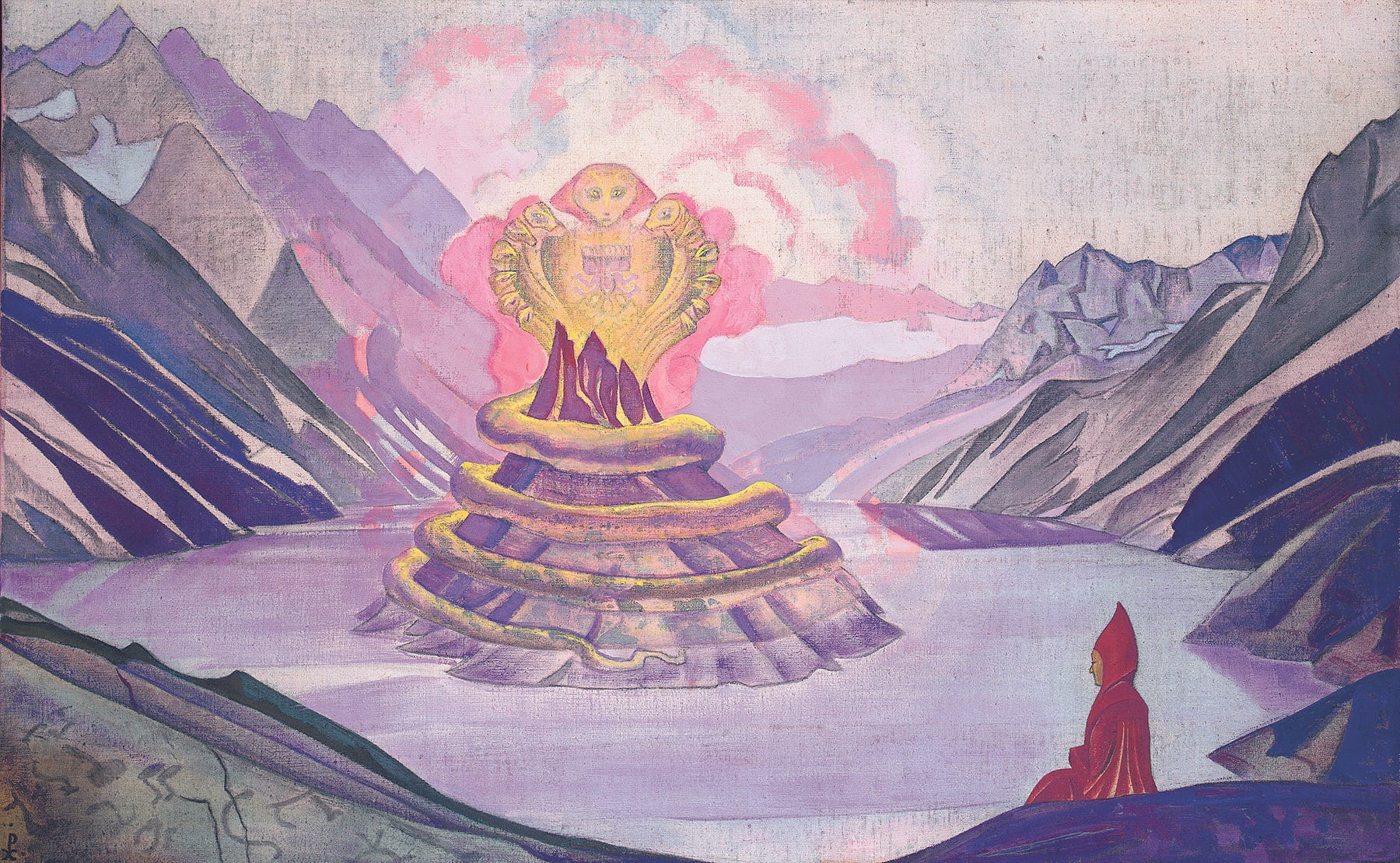
Inheritance
If we are not self-made, then neither is our world.
I could easily have just written this essay purely looking at it only from the work of Hegel. The Phenomenology has more than enough for me to make a lot of these points just from references to it. However, as I’ve mentioned in previous writing, one of the things I’m most interested in is the near-infinite complexity of reality and the endless perspectives we can have on it.
That so many different philosophers have come to these similar conclusions is greatly exciting to me, and comparing their views can teach us a lot. For example, we can expand upon the idea of dependent arising. We can see that not only are we dependent on others and our relationships and our past, but the very universe is as well.
One of Martin Heidegger’s concepts in this field was called Geworfenheit, or Thrownness. That we are thrown into existence under circumstances not of our choosing. We find ourselves here in a world already underway. Long before we make our first choice, countless choices have already been made on our behalf.
“We are never more (and sometimes less) than the co-authors of our own narratives.”
- Alasdair MacIntyre, After Virtue
Following from not only the circumstance of when and where we are thrown, I have been thinking of the full concept additionally as what we inherit.
We inherit a history of actions made before our time. We inherit the nation and civilization that we are a part of, and the norms and commitments that make those institutions possible. The languages we speak. We inherit all of these things as well as the baggage that comes along with them.
The baggage is all of the “debts, inheritances, expectations, and obligations” as MacIntyre puts it in After Virtue. We can see that what starts to appear is a world shaped by countless generations of choices and traditions. Before that even, a world shaped by millennia of entwined interaction with its inhabitants and the very space it exists within.
We now see that we become conscious of ourselves through the relation and interaction with everything else, and that the history of such relations has shaped our world. The obvious thing to take from this is that inheritance is deeper than just being handed these different things and having to deal with it. We are confronted with one of the most important ideas we will ever have to face.
If we inherited our existence from the totality of the connections of the past, then what we contribute will inevitably become what is inherited by the future.
Already Involved
“I can only answer the question ‘What am I to do?’ if I can answer the prior question ‘Of what story or stories do I find myself a part?”
- Alasdair MacIntyre, After Virtue
Philosophers have commonly brought up the idea that modernity and society as a whole have tended towards the “view from nowhere” approach towards analyzing situations. That we can take in all of the facts and fully evaluate everything from a perfectly neutral position.
We can see, as do the philosophers we have been looking at, that no such position exists. We are always someone, somewhere, embedded within our particular history and the infinite web of relationships and connections. Even as a judge we are always also a participant.
So as the self emerges from relationships, and our world arrives through what conditions we inherit, so too does our place within the greater narrative of our existence arise from the relation between all things. We are never standing outside of these processes deciding whether to get involved. We arrive already participating in them.
We are born already a subject that is interacting with, and changing, our parents, our family, the community, and our culture. Every action reinforces or transforms some parts of our inherited reality. No matter what we do, our actions have consequences for others. Even refusal is participation.
So if we are perpetually and intimately involved in our reality, always a participant, then what does our involvement mean?
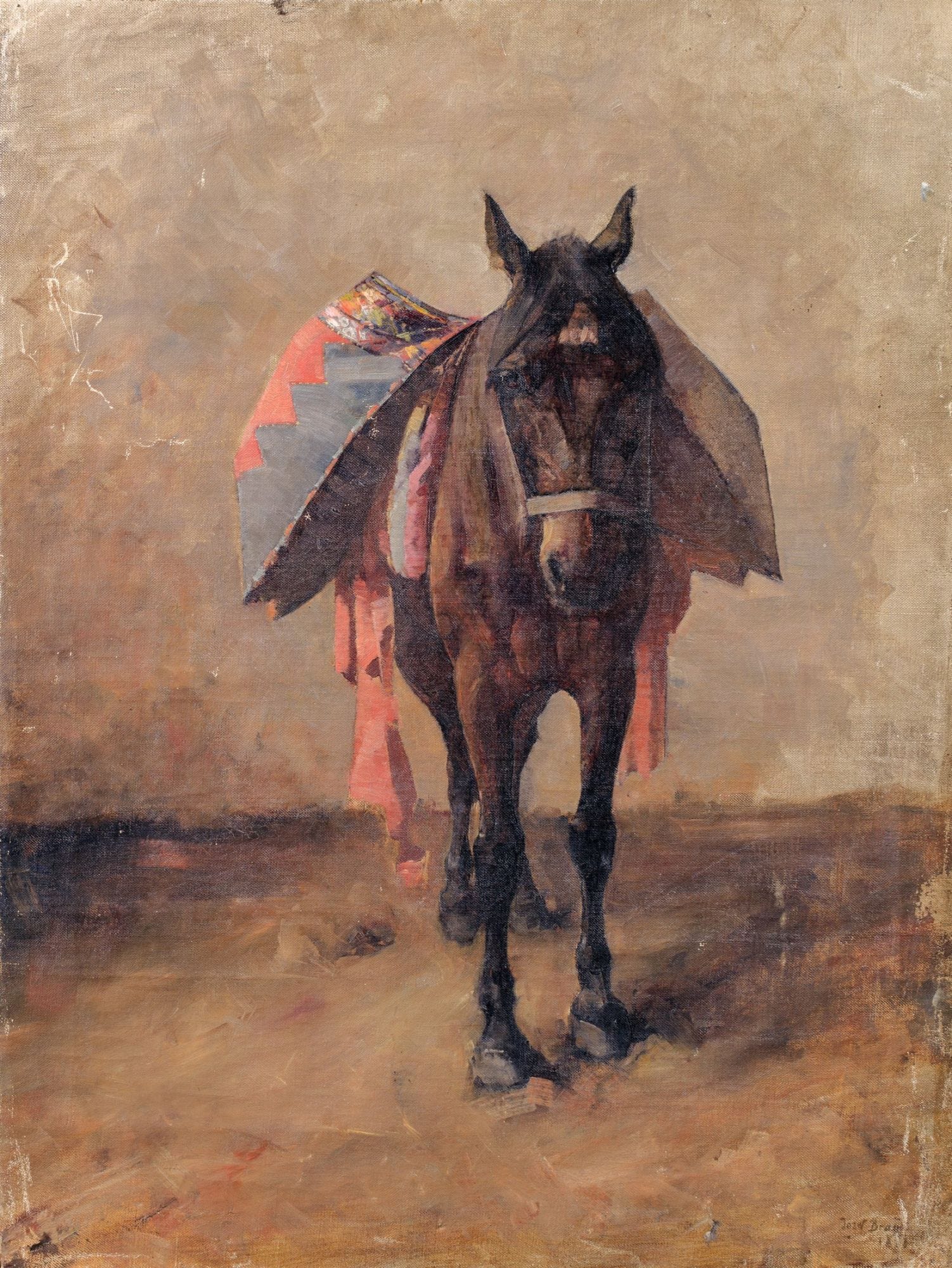
Burden and the Emergence of Responsibility
At this point, perhaps you might object. “I didn’t choose any of this, why should I care?” Nobody asked to be born, right?
We return to the beginning. To the claim of that ethical demand placed upon us by our encounter with the Other. We now know that we are never isolated individuals who can exist independently and selectively decide which obligations to accept.
We encounter others and immediately both impact, and are impacted by them before we can make any decision or form a philosophy. Children depend on their parents before either can fully understand what their relationship entails. A stranger’s facial expression affects our mood before we even meet. The future generations inherit the consequences of our actions regardless of our intentions.
Levinas explains all of this and shows that if we are to form any type of theory or philosophy, all of this, the ethics, must come first. Relationships and connections exist even if we can’t see them, and our actions affect these connections even if we reject them. An ignored debt will still exist. A parent who chooses not to participate in a child’s life has still deeply impacted them.
Any inherited connection or relationship that we participate in can be thought of as a burden. I landed on the word burden because these connections, like burdens, can be invisible and are carried with us. They affect us, and we them, sometimes unknowingly. A burden is not necessarily negative, but it shapes us all the same.
When we become consciously aware that our actions may affect that burden, we then inherit responsibility for those consequences and an obligation to steward them as wisely as we can.
Responsibility is the conscious recognition of participation in this system where our actions have consequences.
The idea seems abstract until we look at places where responsibility becomes visible. MacIntyre often discusses responsibility through what he calls practices.
Practices can be thought of as communities of participation with inherited standards. Participants gradually learn to uphold these standards, and can be considered good or successful within the community for being a model bearer of the standards. Teaching, parenting, and practicing medicine could all be thought of as practices, although there are innumerable others.
What makes a practice meaningful and morally significant is not the activity, but the web of relationships that surround it. The practice has internal standards because they develop over time through the same inheritance as all these relations.
We can then expand the scope dramatically. If all of existence is relational, then these practices are just one particularly visible form of a more universal condition.
Practices make the condition visible because their relationships are obvious. A teacher has students that they shape through their actions. Parents impart nearly everything onto their children. We participate in families, communities, cultures, nations, and history.
We are always participating in networks of influence and consequence. Responsibility is the recognition of that fact.
Uncertainty
If I arise only through what I have inherited and my relationships, so too am I informed by my experience in the military. Someday I will explore that influence more deeply, but for now I am reminded of something particularly relevant.
One of the most fascinating developments in the modern military is the concept of mission command or, more specifically, decentralized execution. Military theory is a massive and complicated beast so I’ll be extremely brief.
Military leaders realized that modern warfare was becoming too complex. The battlefield is a confusing mess, enemies are intelligent, and there are constantly evolving threats to life and communications. In order to more fully exploit sensitive situations where there may be a lack of communications between the officer in command and their non-commissioned officer (NCO) in the field, command was decentralized.
This meant that the NCO, understanding their commander’s intent, is given the trust to make hasty decisions in the face of uncertainty, and to issue orders to subordinates in order to accomplish the mission.
This revolutionized warfighting, granting armies the ability to rapidly react to changing battlefield conditions and adapt to the chaos of a more industrialized age of combat.
The point I want to make in bringing this up is that we as agents of consequence in a fully relational world will always be forced to act under uncertainty. Perfect knowledge is impossible, yet action is unavoidable.
The lesson extends far beyond military theory.
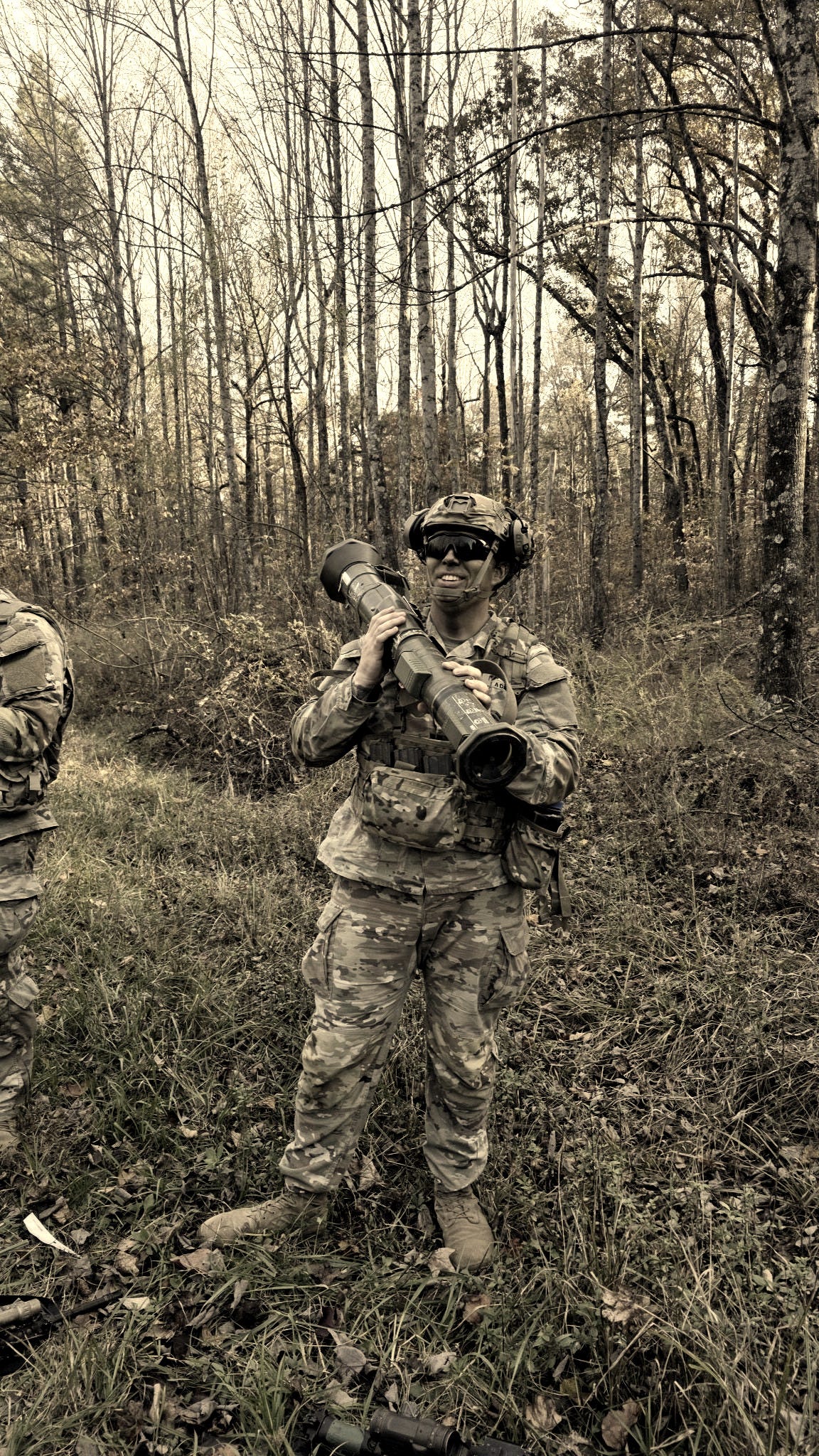
We find ourselves in a world of immense complexity. Every action enters a network of relationships whose full consequences we cannot possibly foresee. We help shape the future that we will never see. Yet our decisions can’t be postponed due to lack of information.
If we hope to ever develop an ethical framework capable of guiding our action in such a world, then uncertainty cannot be treated as an exception to the system. It must be recognized as an ever-present condition.
Likewise, we must be clear about our intent.
Not intent in the narrow sense of “I didn’t mean to cause harm,” but intent in the broader sense of what our ethical project is trying to accomplish.
What are we aiming toward?
What are we attempting to preserve, cultivate, build, or pass on?
Levinas, Hegel, MacIntyre, Nagarjuna, and many others offer valuable tools for thinking through these problems, but we must still act.
As I argued in the article on pessimism, the future remains radically open.
I discussed the possibility of immense social transformations and technological advancements. However, just because we can see the possibility of this great unfolding of progress, does not mean I am saying that we are destined to end up at some final state of eternal happiness and perfection.
That is a myth.
The real openness lies in this continuous process of becoming. In interacting with the web of infinity, inheriting what was left to us, participating in our relationships, and contributing something of our own to the future.
We inherit a world shaped by countless generations before us. We transform it through our actions. Future generations inherit the result and continue the process in turn.
These insights are expanded upon frequently by the compelling Slavoj Žižek.
Drawing heavily on Hegel, Žižek argues that we should abandon the expectation that history will eventually reveal a final harmonious standpoint from which everything becomes clear.
No perspective exists from which all responsibilities and consequences can be perfectly calculated.
The work remains, and will always remain, unfinished. Knowing this, we seek a way not to complete anything, but to learn how to best live with each other and what we can best contribute from our time before passing it on.
Courage
“The good life for man is spent in seeking for the good life for man.”
- Alasdair MacIntyre, After Virtue
It may seem as though these burdens placed upon us are impossible to bear and the responsibilities are too much. If the future is unfinished, uncertainty can never be eliminated, and we can never complete the job, what does success even look like?
While I argue that we are now more responsible than we could have imagined, that doesn’t mean we are responsible for completing the work. No generation ever has. We know now that it isn’t possible.
Previous generations also inherited the work. They improved parts and damaged others. They passed on their knowledge, and the practices that we can use to help guide us along the way.
We’ll be no different. We too will leave behind successes and failures, but can work together to decide what sort of inheritance we choose to pass on.
I am anticipating the common critique in today’s ethical conversations that brings up the issue of too much responsibility being placed on the individual in the face of the monolithic institutions we live with.
You would not criticize a firefighter for saving a child from a burning home while fire still exists elsewhere. Nor would you criticize a physician for healing a patient while disease has not been eradicated.
Their actions do not absolve society of its broader responsibilities. Building codes still matter. Public health systems still matter. The responsibilities of these institutions still matter.
Yet neither do the failures of those institutions absolve the firefighter or physician of their own responsibilities when confronted with a situation in which they can make a difference.
The world is relational all the way down. Responsibility exists at many scales simultaneously. Individuals inherit responsibilities and communities, corporations, governments, and civilizations inherit responsibilities as well.
Recognizing one level does not erase the others. We can imagine concentric rings of responsibility expanding from each of us, distributing responsibility across society. Beings capable of taking larger and more consequential action towards others must bear more of the burden of responsibility.
We inherit a world we did not create, participate in processes we did not begin, and influence futures we will never see.
Responsibility emerges from that fact whether we acknowledge it or not. We must find the courage to shoulder the burdens we didn’t choose, tend the fire we inherited, and pass it onward.
These are my Lamentations of Late.
- JD
Nagarjuna may not have been the originator of these ideas in Tibetan Buddhism, and simply been the driving force in reviving and defending ideas from earlier sources. - Choong, The Notion of Emptiness in Early Buddhism (1999), Shi huifeng: “Dependent Origination = Emptiness”—Nāgārjuna’s Innovation?
I very much agree with all this. I think we are ethically obligated to contribute to this world. The problem, then, is not just whether we are obligated, but how to get others to contribute too. So most of my recent writing attempts to diagnose why people don't act on this responsibility, whether it be due to epistemic or aesthetic limitations.
ie this is the opposite of the gorgon culture of commodifying emotional labor; indeed derrida says "we are responsible for that which we find ourselves not responsible for" as opposed to our culture of "you dont owe anyone anything" . No, you do owe.
seminarschools.com/devilsadvocate
https://seminarschools.com/polymyth/devilsdiary/entry-the-fourth/