

"Immortality is Awesome, Actually." — Against the Philosophy of Finitude.
How an Open Future Changes the Case Against Immortality.

The Opening Claim
The traditional case against immortality often assumes that life is meaningful largely due to its finitude. The fact that life will end. That our choices matter because time is scarce. I argue the opposite. If the universe and future remain open1 then immortality grants access to infinite novelty, growth, and participation in the ongoing creation of reality. The value of life is not derived from its ending, but from the possibility of more participation ahead.
While researching some of the previous philosophical questions here, I kept returning to the topic of immortality. I’m not talking about life extension itself, but how often I saw that the defense of mortality was being treated as self-evident. We encounter the assumption that finitude is a boon, and that death gives life meaning. I set out to examine that assumption, because I think it is less obvious than it may seem.

The Traditional Case for Finitude
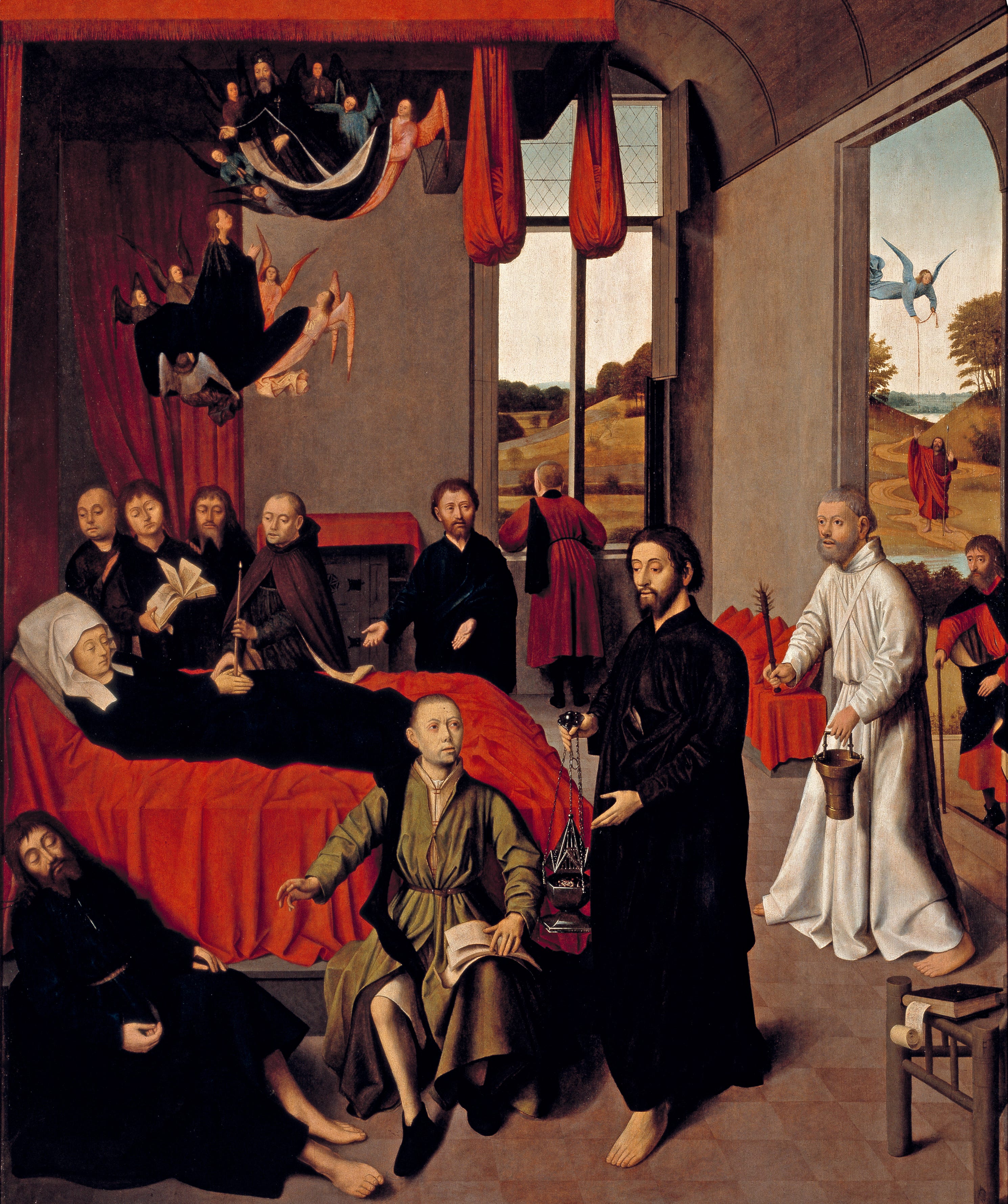
In his essay The Makropulos Case, philosopher Bernard Williams makes the argument that death is preferable to living forever. Williams claims (through the fictional character Elina Makropulos, or EM) that a finite person eventually exhausts all meaningful novelty. The argument that living forever would get boring or that we would simply run out of things to do is a common one.
Williams was not the first to bring these ideas to light in his works. In my essay against philosophical pessimism, I highlighted the work of Philipp Mainländer. One of my main interests in his work is his argument that even given an infinite time to develop and progress, humanity will eventually exhaust all novelty and possibilities and succumb to the suffering of existence.
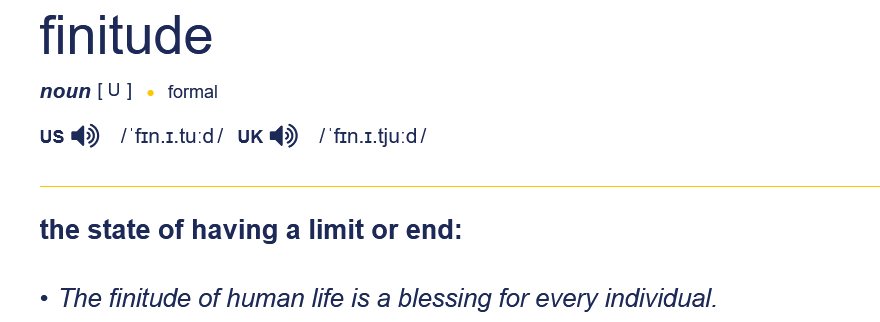
The existentialists also had much to say in this lane of thinking, as pondering immortality is an obvious step when we are considering the value and meaning of existence itself. It is no coincidence that even the provided dictionary example of finitude shown above was a quote
about Heidegger’s massively influential Being and Time.
“… I am going to suggest that … an endless life would be a meaningless one, and that we could have no reason for living eternally a human life.” - Williams, 1973, p.3
Now, just because Williams argues against immortality doesn’t mean he is arguing that death is necessarily good. He speaks to the Epicurean idea of “When we exist, death is not; and when death exists, we are not.” Williams rejects this with his claim that we have reason to resist the things that block what we desire in life, and death is a main offender in this regard.
However when the obvious next step of immortality comes in, that if we should resist death then we should have reason to live forever, Williams argues that this is a trap. He says that given immortality we will eventually exhaust all possible desires.
So Williams argues that although death is an evil because it frustrates our desires, immortality would destroy the very conditions that make life meaningful. For Williams, our projects and desires make us what we are. Given that we exhaust all desires and projects, the real issue is not just boredom but this exhaustion leading to the breakdown of the self. If we are what we do and what we desire, then when those things are gone or just endlessly repeating, we no longer progress as an individual and lose ourselves.
If these assumptions are correct, then immortality may indeed be a trap. If they are false, then the case against immortality is less certain.
The Participation Argument
Williams' argument places great weight on individual desires. Meaningful life is tied to the projects we pursue and the goals we wish to achieve. When those desires are exhausted, meaning disappears with them.
I argue that meaning comes from participation. Similar to the ideas I introduced in my essay on responsibility, we inherit the relationships and connections in our lives before we make any choices. The meaning in our lives comes from the opportunity to participate in these relationships, and in institutions to further the development of such relationships, and in our own self-development.
The participation in the development of things larger than ourselves can’t be reduced to just desire satisfaction. We often find meaning in contributing to relationships or institutions or helping others external to us.
So I propose the following;
P1: A life is meaningful insofar as it contains novel opportunities for genuine participation in reality.
P2: Genuine participation requires the possibility of novelty, discovery, growth, or creation.
P3: An open universe continually generates those possibilities.
P4: If reality remains indefinitely open, those possibilities remain indefinitely available.
P5: Immortality preserves access to those possibilities.
C: Therefore, if reality remains indefinitely open, then immortality is compatible with an indefinitely meaningful life.
In short, immortality need not lead to boredom. Rather than death being the “horizon that gives life meaning,” immortality may give us access to the inexhaustible horizon of becoming.
Precursors
In order to help illustrate my ideas I’ve come up with a bit of a thought experiment. I’m using some of my favorite references2 pertaining to this topic. Each of these examples serves to isolate different features of the immortality problem. They are not meant to be thought of as direct solutions to any piece of it, but to introduce concepts that can later be manipulated. When combined we can imagine whether immortality remains undesirable even when the usual objections are solved for. I’ll set them up with a quick overview and then bring it all together a bit later on.
1. Cosmological Openness
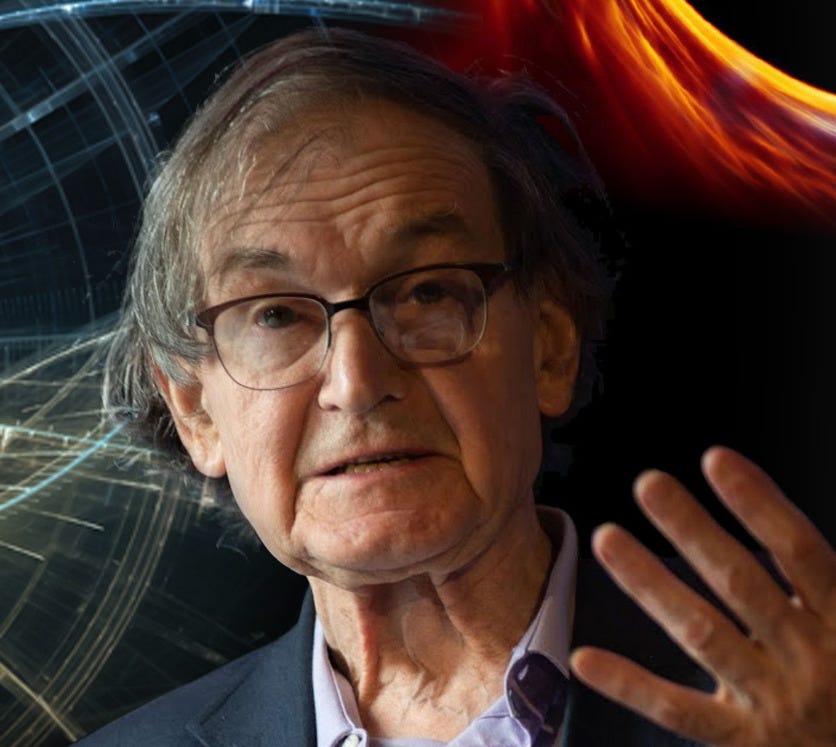
Sir Roger Penrose has proposed that our Big Bang may not have been the absolute beginning of reality. Instead, it may represent the transition from a previous cosmic era. Penrose’s theory is called Conformal Cyclic Cosmology.
In an extremely quick and unqualified explanation;
The Big Bang happens
The universe expands out over untold trillions of years
Matter decays and the classic “heat death of the universe” happens
The universe becomes scale-less (a small universe with no matter or activity is mathematically identical to an infinite universe with no matter or activity)
This scale-less far future universe can be considered equivalent to the early conditions of a Big Bang.
I’ve written about this before, and am personally fascinated with cosmological models, especially cyclic models. The first thing I ever wanted to be when I grew up was a theoretical physicist. For any real physicists or cosmologists reading, I’m not bringing this theory up to claim it’s validity. This theory is wildly speculative (but serious) and one of many others.
The point of bringing up this cosmological model is to emphasize the implications in both the potential and the uncertainty of our universe. As far as we know, it is still very possible for there to not be a fixed beginning or a final ending to our universe. It may be better to think of our universe as one cosmic epoch of many (Penrose calls these aeons) linked to the subsequent ones through transformation.
If we imagine Penrose, or any of the infinite cyclic models to be anywhere close to correct, then we can assume the universe may truly be open in a cosmological sense.
2. The Absolutely Safe Capsule

The Absolutely Safe Capsule is a device from the video game Mother 3. The game is twenty years old at this point, but technically spoilers ahead.
The capsule is a device in which someone enters and then is kept, as the name implies, absolutely safe. They can’t be harmed by anything inside or outside of the capsule, and they’ll be kept alive forever. The capsule is also completely invulnerable and can’t be destroyed. We can momentarily ignore the physical possibility of this to proceed onward.
There is, however, a significant downside to the capsule. Once it becomes inhabited and the door seals, it can never be reopened. The character who goes inside in Mother 3 is not aware of this and becomes completely sealed away forever, doomed to an immortal and invulnerable eternity inside the capsule.
The internet has been enamored with, and having discussions about, the capsule for nearly the entire twenty year lifespan of the game. This forum post from 2008 (and there are many more posts/blogs/videos on the topic) features a short discussion with the first interesting question already starting to form — “If you knew ahead of time, would you still choose to enter the capsule?”
As far as our knowledge of the capsule goes, it contains nothing inside aside from whatever techno-magical properties are allowing it to keep the inhabitants alive and safe. We can immediately see that most people would choose not to enter the capsule if given a choice.
This to me does show that this infinitely long existence will lead to boredom, but that’s obvious, right? There’s nothing to do!
The more interesting observation in my opinion is that even though the inhabitants are immortal, they have effectively been removed from existence. They can no longer participate in any of their relations, they can no longer develop new ones, nor can they work on self-development (aside from potentially an eternity of prison workouts).
Can we however imagine the capsule without the restrictions? Surely. Let’s keep in mind an Absolutely Safe Capsule that can be exited after entry and that has the capacity to store objects and a larger number of people.
3. The Hyperbolic Time Chamber
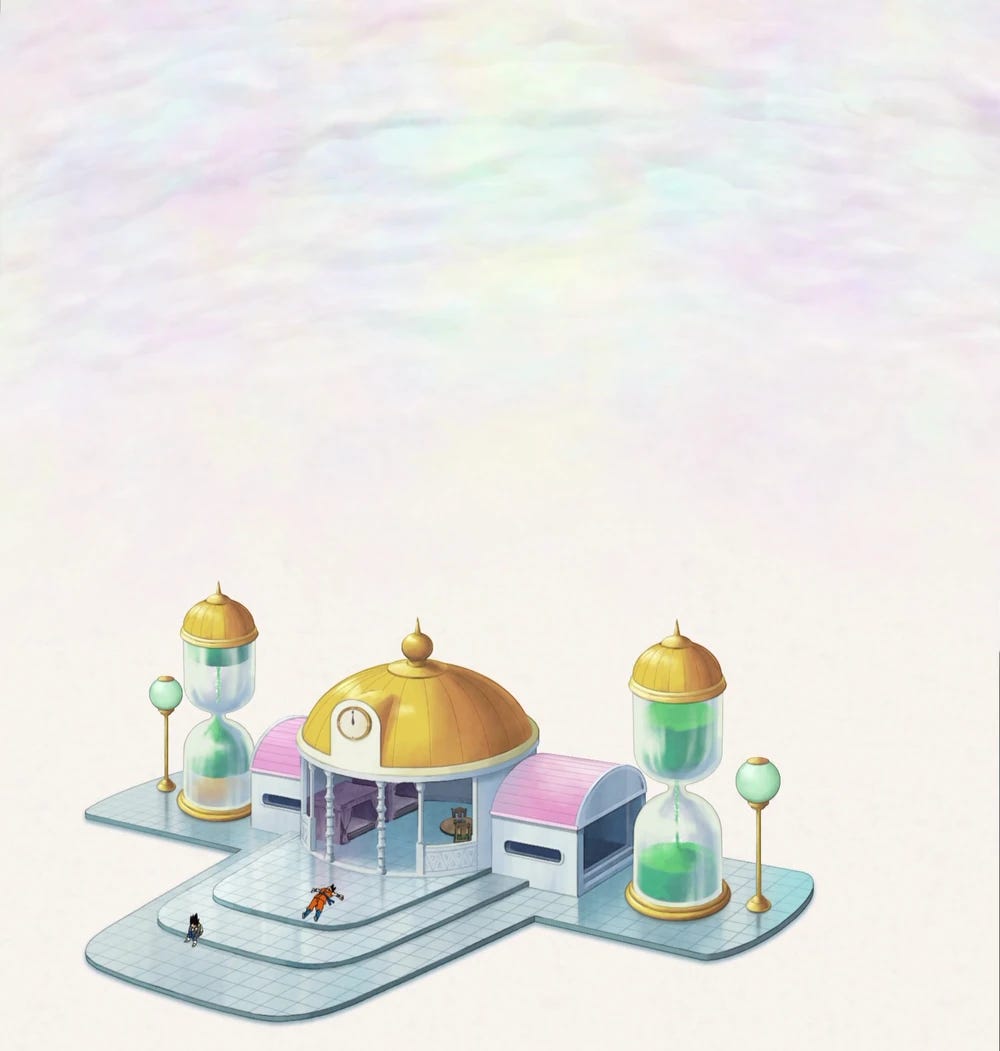
The Hyperbolic Time Chamber, or the Room of Spirit and Time, is a plot device and location in the famous anime series Dragonball Z. The chamber is essentially an alternate dimension that is accessible through different doors or portals in our own reality. The special thing about the chamber (aside from the whole alternate dimension thing) is the change in the passage of time.
Essentially it is a pocket dimension that is both accessible from our universe and where time is unbound to the time of our own. The characters experience one year of time inside the chamber while only one day has passed on the outside.
For our purposes, the important concepts are an accessible pocket universe3 and the possibility of experiencing time independently of the surrounding cosmos.
4. The Matrix
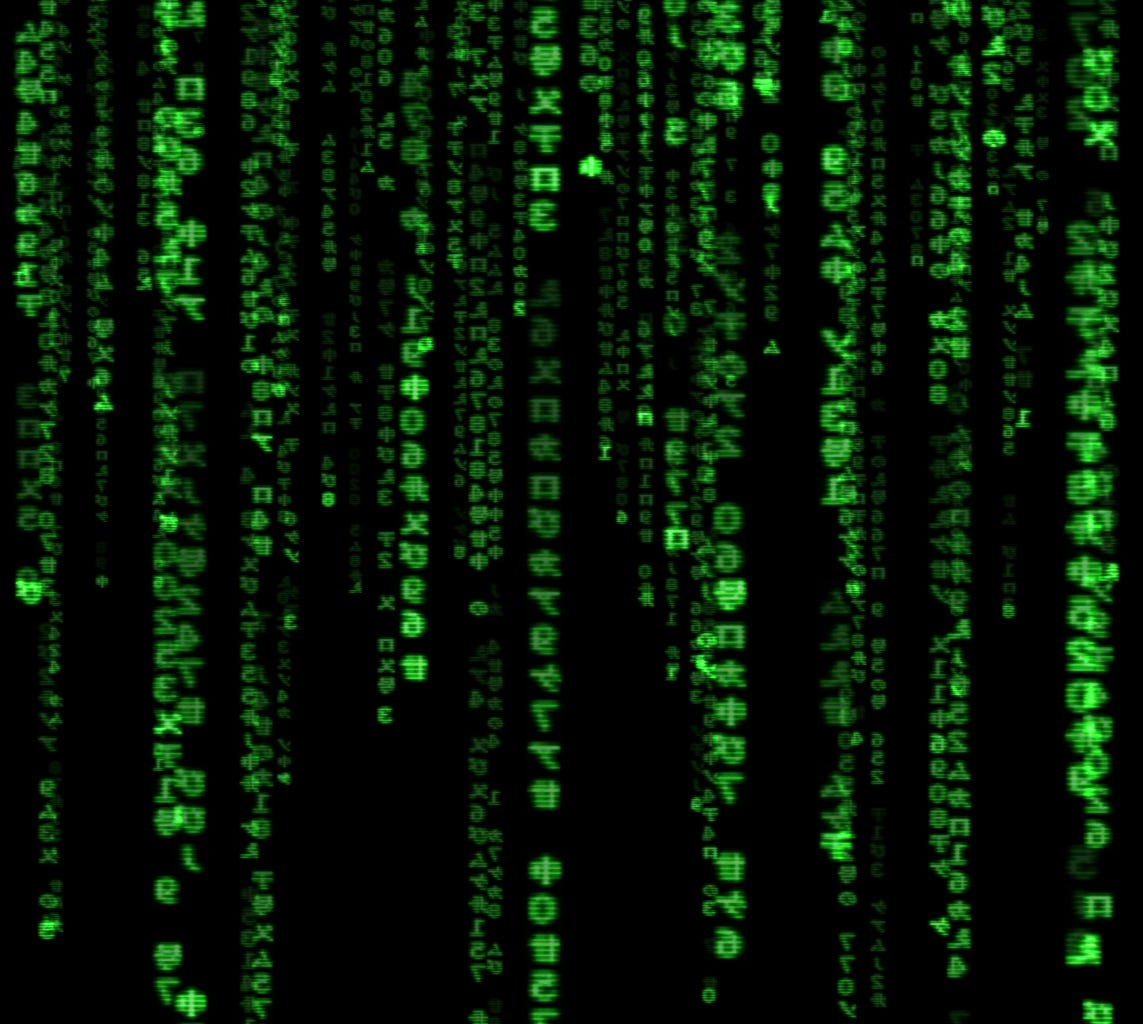
Who doesn’t love The Matrix. I don’t need to explain much here, but what I’ll take for the experiment is the idea that a potential virtual reality of such extremely high fidelity could someday exist. One that we could integrate with in such a way to feel as though we were in that world and maybe even forget about the outside reality for the duration.
We can think of this as a simulation that we can enter, experience the desired life or program fully believably, and then exit back out to our real life afterwards.
The Infinite Participation Thought Experiment
I really wanted to name this the Cosmological Hyper-Capsule Matrix or JD’s Infinite Demon or some typically insane thought experiment name like that, but I’m trying to be serious here.
Williams assumes that meaning is grounded primarily in the projects and desires of the individual. My proposal shifts the focus outward. Meaning emerges from participation in a reality that exceeds the individual and remains perpetually unfinished.
Can such a reality continue to generate opportunities for participation in perpetuity?
Imagine the Absolutely Safe Capsule, capable of surviving indefinitely. Remember that our version can be entered and exited freely, sustain many occupants, and survive the most extreme of cosmological events. We can imagine this as an indestructible space ship that sustains the inhabitants.
On board the capsule is a chamber that functions like the Hyperbolic Time Chamber. Occupants can enter and experience vast stretches of subjective time within the pocket dimension while no time at all passes on the outside.
Within the chamber the occupants have installed their version of the matrix. A highest-of-fidelity virtual reality simulation system that is capable of generating high complexity experiences, projects, civilizations, and entire lives. The occupants can choose an experience, go into the chamber and live their entire chosen lives within the system, even choosing to not remember their outside existence at all, and then return to their baseline reality as if no time had passed.
Now we imagine this Absolutely Safe Capsule in a cyclic universe. Our cosmic era comes to an end, the heat death arrives, but the capsule remains. A new universe is born from the big bang at the end of our old universe, the cosmos forms. New life is made possible, and the occupants of the capsule can emerge to learn and explore. They return to the capsule and the cycle repeats.
If reality remains open, then the immortal individual is not condemned to repeat the same life forever, nor to exhaust the possibilities available to them. Reality may continue to generate novel experiences, desires, relationships, and the opportunities for participation.
Magical Christmas Land
Okay after all of that I know what some of you may be thinking. Allow me to defend the atypical argument choices here. I’ll cap off my nerd cred in this essay with a reference to Magic: the Gathering.
In Magic, when people are brainstorming a new deck or archetype, they will often test the deck. They play it against other decks to see how it holds up. There is a name for a situation in which the person doing the testing will imagine or even actually stack the deck with the exact perfect starting hand in order to see the deck’s best possible outcome.
This situation is called “Magical Christmas Land.” It is the perfectly ideal situation that will likely not happen in all practicality.
I simply claim that the traditional argument against immortality already argues from the assumption of some situation where they can be granted eternal life, invulnerability, or technological wonders beyond our comprehension. This is already Magical Christmas Land.
They just still decide that all of that will inevitably lead to boredom.
I’m just setting up my own Magical Christmas Land and showing that within these possibilities, and my original claims of participation bestowing meaning, we need not be bored immortals.
However, that doesn’t mean that I don’t take these ideas seriously. The purpose of this thought experiment is not to predict reality. It is to isolate assumptions. If we are permitted to imagine immortality in order to argue that it would become unbearable, then we are equally permitted to imagine immortality in order to test whether that conclusion actually follows.
Conclusion
The traditional defense of finitude assumes that life gains meaning because it ends. Yet if reality itself is an endless process, as I imagine and as some cosmological models suggest, then meaning may arise instead from our continued participation in an unfinished universe.
Throughout Lamentations of Late I have argued that we arrive in the middle of the story. The value of life has never seemed to me to reside primarily in its ending. It resides in our opportunity to participate, to create, and to pass something onward.
We can envision countless possibilities for sustained novelty, creation, and relationships, even across the potential death and rebirth of the universe. If this kind of immortality can be envisioned and seen positively, then our thinking should be adjusted. I am not arguing that immortality exists or is even achievable. Rather that the undesirability of immortality is much less obvious than is often assumed.
The horizon that gives life meaning may not be death. It may be the possibility that there is always something just beyond the horizon.
Thanks for taking the time to read. These are my Lamentations of Late.
- JD
Undetermined or unsettled. Unknown to us.
Not only do I find these particular ideas useful for this topic, but they are influential to my thinking in the first place. I grew up with these things, and I’m sure without them I wouldn’t have had these ideas floating around my head at all.
I am aware of the outrageously speculative idea that this will ever be possible. As of now, with distant future technological progress and energy production breakthroughs, it remains “theoretically possible but maybe one of the most unlikely things ever”. Good enough for our purposes.