

Field Notes and Fragments #2: Always Learning
Weekly Observations from an Unfinished Journey


Welcome back for another weekend Field Notes!
This week was full of lessons, both personal and philosophical! I’ll start there and then we’ll get into some reviews and recommendations, and some fun news.
I published my first article on Free Will and Freedom and as expected, it was controversial. Some people seemed to get what I was going for, and some were more interested in picking sides in the traditional debate and then pitting me against them. Not to deflect, I also learned a lot about how not to write about free will. That’s bound to happen when I’m approaching this as a kind of “thinking out loud” experiment.
As a recurring theme in this project, I am constantly learning from these ideas that I put out into the world, and then reevaluating and testing them against feedback and opposing thoughts. I’m certain that I will take another approach at this sooner than later. I remain motivated and am truly enjoying this weekly writing process and engaging with so many interesting people along the way. Thanks for everyone who gave it a read or dropped some feedback!
I’d also like to remind everyone that all of my past articles are available for free in the Archive and anyone is welcome to start or add to a discussion in the Chat for my substack. I would be happy to hear about any of your thoughts or grievances with anything I’ve written previously, or new ideas that we can confront together.

The Reclamation of Elias Thorne!
Ian Patterson over at They don’t all have to be good launched an incredible community event centered around a hilarious recent AI-phenomenon. In short, different LLM platforms (seriously, like all of them) have a tendency to hallucinate a very similar cast of characters when they “make up” a story. One of those happens to be the nonexistent man by the name of Elias Thorne. So, Patterson’s brilliant idea is to fight back against the slop, and pull a metaphorical community rescue mission for Mr. Thorne.
As soon as I saw the community event, having already been fascinated by the curious case of Elias Thorne and other such weirdness for a while now, I knew I had to join in. So sometime in the next week or two I’ll be dropping my contribution. This will be my first foray into fiction writing on this publication, and I’m excited for the new territory, as well as the challenge of working my philosophical ideas into the story.
As a huge fan of Camus, the idea of utilizing fiction as a vehicle for the exposition of one’s philosophy has always been attractive to me. I am planning on doing a lot more of this, to coincide with the main article series, and I think that this short story will give me a great low stakes entry-point to start practicing.
So, anyone interested can write a short (~1k words) story or piece starring the mystery man, Elias Thorne, and all of them will be released over on They don’t all have to be good on July 13th. The rules are easy.
~ 1,000 words, not strict
ALL characters must be named Elias Thorne
Absolutely no AI use whatsoever
Simple as.
Check out his page and the details to join in.
New (to me) Developments
This week I’ve been thinking about a couple of ideas aside from what I’ve already been mulling around for essays. These have both coincidentally been picking at my brain for a while and also showed up “randomly” in the endless doomscroll.
Panpsychism -
Panpsychism has really been popping off in philosophy circles lately. For those unfamiliar, it is the idea that consciousness, or mentality, is “fundamental and ubiquitous in the natural world”, to quote entry that I linked above.
Personally, I’ve been seeing a ton of discussion around it both as an alternative to the massive amount of Physicalist thinkers (apparently dualism is just too crazy) that seem to inhabit substack, as well as because of Alex J. O'Connor. His YouTube, self named or CosmicSkeptic touches on all sorts of interesting philosophical topics, but he has been on a theological tear for the last few years or so, and has been discussing this particular topic a lot lately.
If you’ve read my essays, my views being hard to place in this field won’t come as a surprise. With my influence from Hegel and other continental thinkers, Buddhism, and Process Philosophy, I have a hard time thinking of anything as “foundational” to the universe. In my view, everything emerges or arises as a part of the relational or interconnected web between all things.
This doesn’t mean that a ubiquitous consciousness can’t fit into my worldview, and I’m sure this has been thought of by some very smart people. I just haven’t dove into it yet, and I’m definitely planning on it. If there’s anyone reading who is familiar with the current Panpsychist school of thought, I’d love to get in touch and hear from you!Intentional Communities and The Polycrisis -
Polycrisis is another term that has been floating around for a while now, and while everyone has unavoidably been thinking about it all, I’m going to just be specific here. This week I came across the term while looking at an interesting site I was linked to.
IntegrationCenter.org is an organization (that I have no affiliation with) that provides free and open resources, business plans, contacts, governance models, and more to people interested in starting their own “Intentional Communities.” An intentional community is the term a lot of people are using for the kind of modern day communal living that has begun being tested out.
Essentially, a group of families or friends pitch in on a large enough plot of land to support feeding and housing all of them. This is something that I think most people have thought about at some point in their lives, even if that thought is “Wow, what a crazy hippy cult thing to do!” but lately the desire to take a step back from involvement in the chaos of modern institutions has hit a new high.
I’m constantly seeing people talking about wanting to go live near nature, escape the rat race, and especially people being nervous about the aforementioned Polycrisis. I personally have been talking about this kind of thing for years. I have increasingly begun to see intentional communities as one of the most sensible and logistically sound ways of making a difference in the lives of your immediate ring of responsibility, as well as a legitimate way of taking back your little piece of power from the concentrated system at large.
I’ll have a lot more to say about this later on, this is a sort of focal point and area of culmination of my philosophy put into practice. For now, I just wanted to highlight the organization that I found to be working on a problem that I’ve been interested in for a while, and to start getting some terminology into the minds of everyone reading! If you’re also interested in these sorts of things, please let me know! I’d love to hear other perspectives.

Recommendations
This week I’ve got two new substack recommendations for you. These are both people who I interacted with this past week and ended up reading some of their work and want to pass it along.
Philosopher of the Oil Sands
Sometimes the algorithm hits you with something that, for one tiny moment, makes you not hate the concept of the algorithm. This is one of those times. A working oilman who drops legitimate practical life lessons and Hegel references? I knew I started a substack for a reason. This is exactly what I’m here for, and urge you all to check this publication out.
I realize I couldn’t be more biased as another (former) oilfield guy and Hegel enjoyer, but as I mentioned in a note earlier this week — anyone and everyone can take something from this work.
This post in particular is something I’d recommend to anyone. A really enjoyable read, you’ll relate to it even if you don’t think you will, and you’ll be thinking about the lessons from it for a while after. I guarantee it.Test Range
Something different here, but noteworthy. I was blessed yet again by the algorithm and stumbled upon this new publication that has begun posting some great short fiction as well as some tech-philosophical/sociopolitical musings in the notes.
I would describe the short fiction pieces as somewhere adjacent to speculative sci-fi with a distinct cyberpunk and tech-noir mood. Very short and punchy with a feel that the author is thinking deeply about the near future. The Polycrisis rears its head.
With the mention of my own interest in jumping into fiction here, Test Range has been a nice jolt of inspiration for me this week. Taking some time away from the philosophy study to just read some quality short fiction has been great. Then the nature of this writing ends up getting me right back in the thinking mood anyways. Highly recommend.
This Week’s Reading:
Nothing finished to report this week, but I am starting two books that I’ll mention.

Clara: Or, on Nature’s Connection to the Spirit World, by F.W.J. Schelling.
Schelling is a fascinating German Idealist philosopher, once roommate of Hegel, and a criminally underrepresented figure of study for current philosophers. I found interest in him through Slavoj Žižek, who is a major Schelling fan. I’ve also recently found a discussion taking place on this book so I decided I’d join in.
The book is a story told through a discussion (classic philosophy fiction right there), with three main characters. Clara, the doctor, and the priest. The book is a very symbolic one, with each character representing a different aspect. Clara, is the personality or the human soul. The Doctor is the physical or the natural. The Priest represent the mind or the spirit. The discussions center around man’s nature both spiritual and otherwise, the link between the “spiritual world” and the natural world, and other such aspects of our existence.
I’m looking forward to getting started with this, and my foray into Schelling’s work. This book, like other works of his, was not actually made available until after his death. His work remains largely unfinished which is a common thread among philosophers that I am interested in.
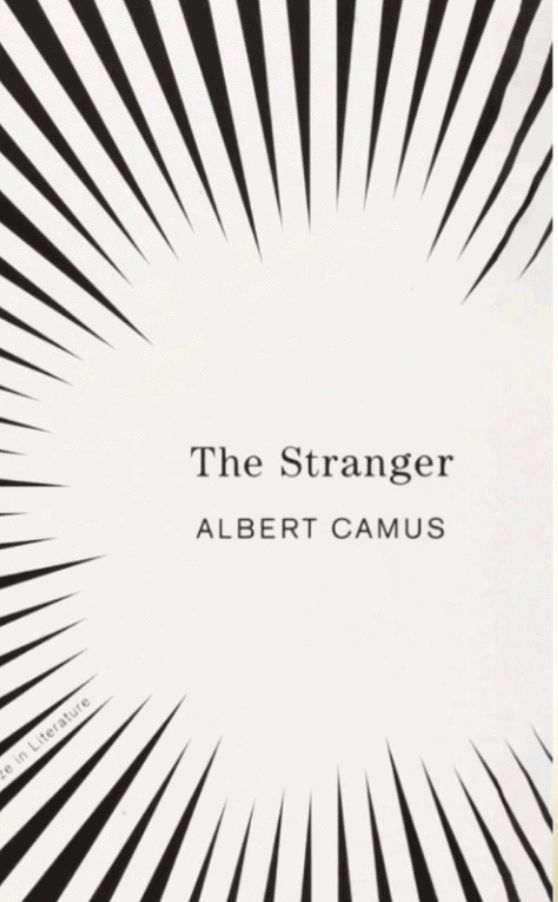
The Stranger, by Albert Camus
Everyone knows this one. I’m a huge fan of Camus, and am going to look back at this one while I’m on the topic of fiction writing. I love how Camus implemented his cycles of non-fictional essay and accompanying fiction work that explains the philosophy. I would really like to try to emulate this in my own work. Not much else needs to be said. If you haven’t, start reading Camus. One of my favorites.
That’s all for this weekends Field Notes and Fragments. Let me know what you thought!
All of your comments and engagement are appreciated and help me to keep steering this ship. I’ll be back Wednesday for another essay.
These are my Lamentations of Late.
- JD
Thank you very much for the shout-out, sir.